Carbon Taxes Go Global: How the EU's Climate Tariffs Are Sparking an Economic Revolution
Swagoto Chatterjee·6 min




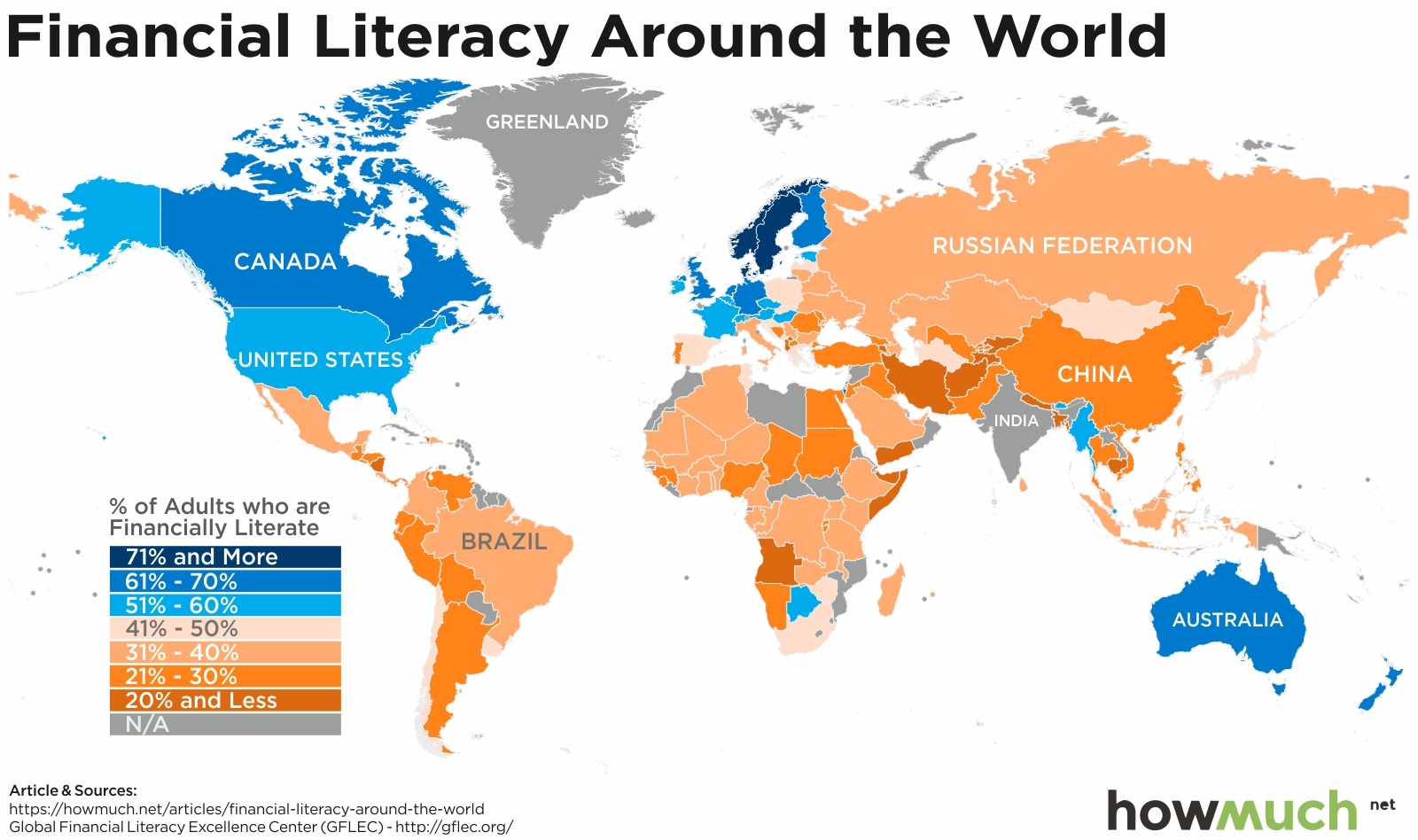 Without adequate financial literacy, it is much more difficult to navigate the global financial markets much less make any sound investment decisions. People need to understand concepts like Inflation, Compound interest & diversification and apply them by experimenting in smaller investments. As per the figure above, only about 20-30% of adults in most countries have any kind of financial literacy or understanding of basic financial concepts. Again, most of the financial knowledge bases are skewed towards the western economies.
Even if someone can overcome the geographical & financial literacy barrier and is ready to invest, political & economic turmoil in their local economy can make it impossible to build wealth by investing. Case in point - Venezuela, Argentina & Turkey which faced a similar situation in 2018 as their markets went into a tailspin (chart below). Imagine what would have happened to the portfolios of investors who had everything invested in these local markets.
Without adequate financial literacy, it is much more difficult to navigate the global financial markets much less make any sound investment decisions. People need to understand concepts like Inflation, Compound interest & diversification and apply them by experimenting in smaller investments. As per the figure above, only about 20-30% of adults in most countries have any kind of financial literacy or understanding of basic financial concepts. Again, most of the financial knowledge bases are skewed towards the western economies.
Even if someone can overcome the geographical & financial literacy barrier and is ready to invest, political & economic turmoil in their local economy can make it impossible to build wealth by investing. Case in point - Venezuela, Argentina & Turkey which faced a similar situation in 2018 as their markets went into a tailspin (chart below). Imagine what would have happened to the portfolios of investors who had everything invested in these local markets.
 This problem can be sold by investing in stable foreign markets, however, a small investor from a third world country might find it impossible to buy expensive foreign currency financial assets. Even if they have the buying power to do so, there are other associated fees with conducting these transactions like - brokerage commissions, taxes, currency conversion fees & stamp duties etc. The U.S stocks (figure below) are an example of how some of the American equities maybe out of reach of an average overseas investor from a third world country.
 More innovations like the smart contracts coupled with these basic features of public blockchains can help address the global inequality of investing in financial markets. Smart contracts are basically self-executing instructions which were introduced by the Ethereum blockchain. When two parties enter an agreement, a smart contract enforces the terms of an agreement - In financial markets, this could mean automation of trades & removal of cost bearing intermediaries. Smart contracts could also enable domestic investors to instantaneously invest in overseas markets without being physically present there or incurring any additional fees or delay.
Apart from this, DLT has also introduced the concept of fractional & micro investing via the tokenization of assets. These digitally fractioned assets provide fractional ownership to the investors without buying the whole thing - just as you can buy digital currencies in fractions ~ 0.1 BTC. This way more people can have a stake in the financial markets utilizing micro investing enabled by tokenized assets (STOs). As in the figure above, it would not be possible for a small investor to buy those expensive stocks, but with new investment methods on the blockchain, they can own a fraction of all three. And all of this would not have been possible with location independence that Internet access & Smartphones have provided.
According to Juniper Research, there are about 2 billion digital banking users globally. The new smartphone Apps have become the torch bearers of the disruptive new model of decentralized finance. As they become more intuitive & simpler to use, barriers to investing would crumble and financial access & wealth-building would become universal.
Email?| Twitter? | LinkedIn?| StockTwits? | Telegram?
More innovations like the smart contracts coupled with these basic features of public blockchains can help address the global inequality of investing in financial markets. Smart contracts are basically self-executing instructions which were introduced by the Ethereum blockchain. When two parties enter an agreement, a smart contract enforces the terms of an agreement - In financial markets, this could mean automation of trades & removal of cost bearing intermediaries. Smart contracts could also enable domestic investors to instantaneously invest in overseas markets without being physically present there or incurring any additional fees or delay.
Apart from this, DLT has also introduced the concept of fractional & micro investing via the tokenization of assets. These digitally fractioned assets provide fractional ownership to the investors without buying the whole thing - just as you can buy digital currencies in fractions ~ 0.1 BTC. This way more people can have a stake in the financial markets utilizing micro investing enabled by tokenized assets (STOs). As in the figure above, it would not be possible for a small investor to buy those expensive stocks, but with new investment methods on the blockchain, they can own a fraction of all three. And all of this would not have been possible with location independence that Internet access & Smartphones have provided.
According to Juniper Research, there are about 2 billion digital banking users globally. The new smartphone Apps have become the torch bearers of the disruptive new model of decentralized finance. As they become more intuitive & simpler to use, barriers to investing would crumble and financial access & wealth-building would become universal.
Email?| Twitter? | LinkedIn?| StockTwits? | Telegram?Faisal is based in Canada with a background in Finance/Economics & Computers. He has been actively trading FOREX for the past 11 years. Faisal is also an active Stocks trader with a passion for everything Crypto. His enthusiasm & interest in learning new technologies has turned him into an avid Crypto/Blockchain & Fintech enthusiast. Currently working for a Mobile platform called Tradelike as the Senior Technical Analyst. His interest for writing has stayed with him all his life ever since started the first Internet magazine of Pakistan in 1998. He blogs regularly on Financial markets, trading strategies & Cryptocurrencies. Loves to travel.