ICHRA: The Next Big Thing?
Sam Bogrov·4 min


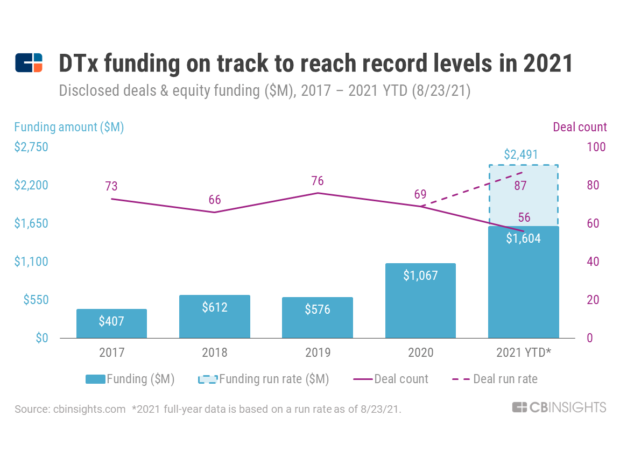 The nuances of these solutions vary by indication. Propeller leverages a sensor to track inhaler use in COPD and asthma patients. Pear Therapeutics integrates elements of cognitive behavioral therapy. Signos (Tau portfolio) leverages continuous glucose monitoring to guide weight loss.
Enticing value propositions and early clinical results have compounded copious venture funding. This sector is in a frenzy. Incumbents are leveraging acquisitions to hop verticals: in 2020 alone, Omada (initially a diabetes management platform) bought Physera (virtual physical therapy) for $30M while Teladoc (telemedicine) acquired Livongo (diabetes management) for a jaw dropping $18.5B. DTx startups are proliferating at an incredible rate, and competition is fierce for the favor of providers, payors, and employers.
At Tau Ventures we are encouraged by these trends but at the same time left with various questions. What is the differentiation? Is such competition bringing out the best, or is it hampering anyone from gaining the momentum and scale necessary to broaden access?
How can we be deliberate in leveraging virtual health technologies such that we don’t exacerbate cell phone addiction, digital fatigue, or the dehumanization of medicine? The early data is promising, but how rigorous is the evidence that these solutions truly work long-term?
These questions echo much of the hesitation and reticence health providers feel when confronted by digital therapeutics. The increased funding is a much needed trend but to truly make a dent in chronic diseases – conditions such as diabetes and heart disease that are responsible for killing 1.7 million, or 7 out of 10, Americans annually – we believe DTx needs to go further. Most solutions leverage a similar toolkit (coaching, analytics, gamification, notifications) to improve medication adherence and health maintenance. The next step is to blend these elements seamlessly into patient’s lives and providers’ workflows. AI and natural language processing have a huge role to play in understanding intent and communicating with users intelligently through voice (see Decoded Health, Tau Portfolio).
We believe that within the next ten years digital therapeutics will evolve into personal digital assistants that understand us as intimately as our family and friends. It will be a brave new world, where the ultimate user interface will be no user interface.
The nuances of these solutions vary by indication. Propeller leverages a sensor to track inhaler use in COPD and asthma patients. Pear Therapeutics integrates elements of cognitive behavioral therapy. Signos (Tau portfolio) leverages continuous glucose monitoring to guide weight loss.
Enticing value propositions and early clinical results have compounded copious venture funding. This sector is in a frenzy. Incumbents are leveraging acquisitions to hop verticals: in 2020 alone, Omada (initially a diabetes management platform) bought Physera (virtual physical therapy) for $30M while Teladoc (telemedicine) acquired Livongo (diabetes management) for a jaw dropping $18.5B. DTx startups are proliferating at an incredible rate, and competition is fierce for the favor of providers, payors, and employers.
At Tau Ventures we are encouraged by these trends but at the same time left with various questions. What is the differentiation? Is such competition bringing out the best, or is it hampering anyone from gaining the momentum and scale necessary to broaden access?
How can we be deliberate in leveraging virtual health technologies such that we don’t exacerbate cell phone addiction, digital fatigue, or the dehumanization of medicine? The early data is promising, but how rigorous is the evidence that these solutions truly work long-term?
These questions echo much of the hesitation and reticence health providers feel when confronted by digital therapeutics. The increased funding is a much needed trend but to truly make a dent in chronic diseases – conditions such as diabetes and heart disease that are responsible for killing 1.7 million, or 7 out of 10, Americans annually – we believe DTx needs to go further. Most solutions leverage a similar toolkit (coaching, analytics, gamification, notifications) to improve medication adherence and health maintenance. The next step is to blend these elements seamlessly into patient’s lives and providers’ workflows. AI and natural language processing have a huge role to play in understanding intent and communicating with users intelligently through voice (see Decoded Health, Tau Portfolio).
We believe that within the next ten years digital therapeutics will evolve into personal digital assistants that understand us as intimately as our family and friends. It will be a brave new world, where the ultimate user interface will be no user interface.
I have been in Silicon Valley for 20 years -- at Samsung NEXT Ventures, running my own startup (as of May 2019 a series D that has raised $120M and valued at $450M), at Norwest Ventures, and doing product and analytics at Google. My academic training is BS in computer science and MS in biomedical informatics, both from Stanford, and MBA from Harvard. I speak natively 3 languages, live carbon-neutral, am a 70.3 Ironman finisher, and have built a hospital in rural India serving 100,000 people.