
Every day trillions of bytes of data gets generated online & on cellular devices around the world. What most of us don't know is that this is just scratching the surface of the enormous virtual community called the World Wide Web. The generation of data on the this online ecosystem is pretty synonymous to an iceberg on the ocean - which is only 10% above the sea level & the giant 90% of the portion lies underneath the water. Only in this case, it is even lower, that only 4% of the visible data is on top which is freely accessible and/or generated by popular websites like Google, Wikipedia & Bing etc. To take everything in perspective just look at the infographic below.
 The virtual world of the of the World Wide Web is divided into three categories:
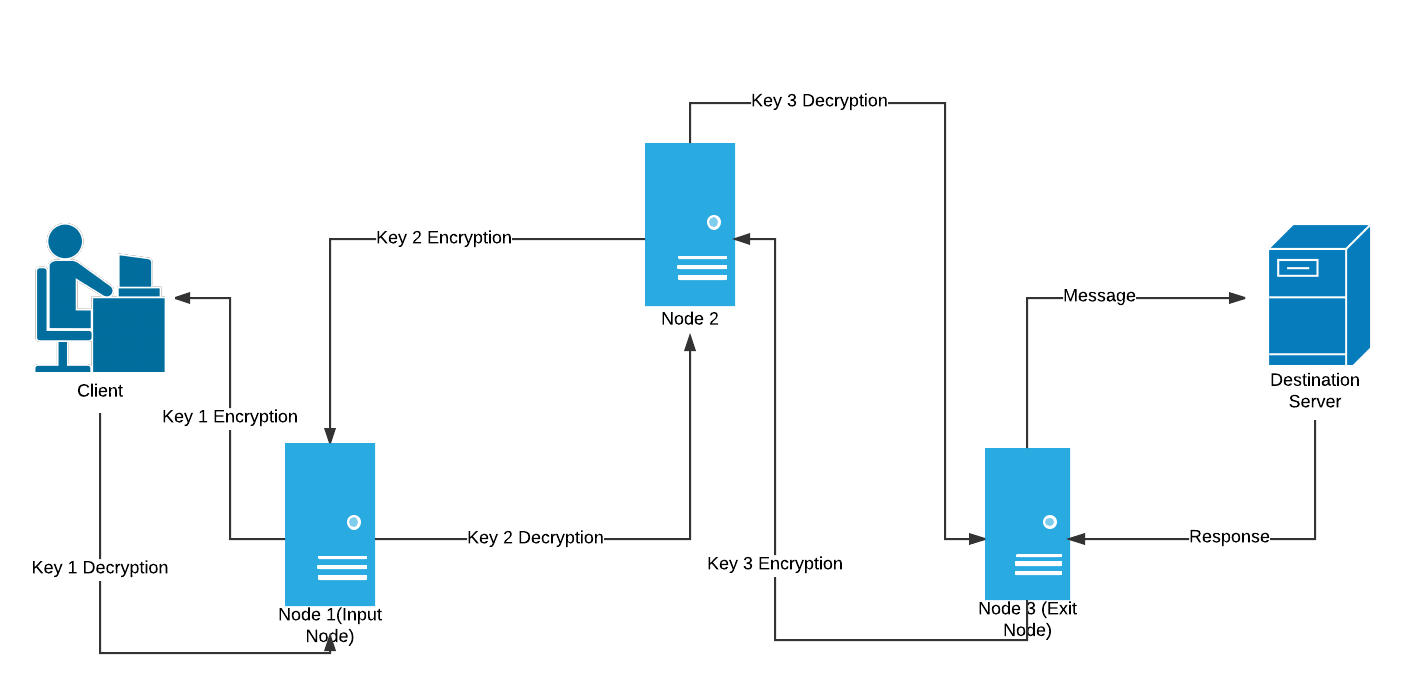 The websites here come with a .onion domain. The TOR browser uses the Onion protocol which ironically was developed by the U.S Department of Defense for secure communications. Onion protocol uses a multi-layered encryption technique as shown in the figure above, thus the analogy to the rings of an onion. It is still being used for secure communications by the military, government officials, journalists etc. in the real world but unfortunately also by the hackers, whistleblowers & other evil players on the dark side.
I guess there is & always will be a dark side to technology. We just need to know how to keep it in check so that it does not overshadow the good that has been achieved with this digital transformation.
Stay in touch: Twitter | StockTwits | LinkedIn | Telegram| Tradealike
The virtual world of the of the World Wide Web is divided into three categories:
- Surface Web (Clear Net) - consists of the indexed pages on the internet like the one you are accessing right now. Internet giants like Google & Amazon are the kings of this indexed web. Accessible to everyone - Facebook, Gmail & E-bay are examples of this type of Web.
- Deep Web (non-indexed) - It is a subset of the Internet or the major portion of the web consisting of non-indexed pages that can't be accessed with search engines like Google or Bing. Web pages that require membership logins fall under this category - online banking, My Yahoo login or your company intranets are all examples of Deep Web although there is nothing illegal about it.
- Dark Web (Dark Net) - This is a subset of the Deep Web & the hub of mostly illegal activities. This can also be called the black market of the digital realm, but none of the content or websites can be accessed via the normal browsers like Chrome, Internet Explorer or Firefox etc.
The websites here come with a .onion domain. The TOR browser uses the Onion protocol which ironically was developed by the U.S Department of Defense for secure communications. Onion protocol uses a multi-layered encryption technique as shown in the figure above, thus the analogy to the rings of an onion. It is still being used for secure communications by the military, government officials, journalists etc. in the real world but unfortunately also by the hackers, whistleblowers & other evil players on the dark side.
I guess there is & always will be a dark side to technology. We just need to know how to keep it in check so that it does not overshadow the good that has been achieved with this digital transformation.
Stay in touch: Twitter | StockTwits | LinkedIn | Telegram| Tradealike
Faisal is based in Canada with a background in Finance/Economics & Computers. He has been actively trading FOREX for the past 11 years. Faisal is also an active Stocks trader with a passion for everything Crypto. His enthusiasm & interest in learning new technologies has turned him into an avid Crypto/Blockchain & Fintech enthusiast. Currently working for a Mobile platform called Tradelike as the Senior Technical Analyst. His interest for writing has stayed with him all his life ever since started the first Internet magazine of Pakistan in 1998. He blogs regularly on Financial markets, trading strategies & Cryptocurrencies. Loves to travel.
More in Data Science & Analytics
Quality Data, Quality Decisions: Why Web Scraping is Essential for Advanced Analytics
Gediminas Rickevičius·9 min
Supply Chain Blind Spots: The Psychology of Hidden Risks
Flavio Aliberti·5 min
What are we solving with analytics?
Michiko Wolcott·6 min